Personal Effects Shipping: 2026 International Guide
Master personal effects shipping for 2026. Get customs rules, documentation, and packing tips for a smooth international move of your belongings.
You're probably dealing with the visible part of an international move first. Boxes, labels, what to take, what to store, what to leave behind. Then customs enters the conversation and the move changes shape. It stops being a packing exercise and becomes a documentation exercise.
That's where many personal effects shipments go wrong. Not because the goods are unusual, but because the paperwork doesn't match the goods closely enough, the inventory is too vague, or restricted items are buried inside an otherwise ordinary household shipment. For relocation companies, that's the difference between a smooth clearance and a preventable hold.
Table of Contents
The Challenge of Moving Your Life Across Borders
International moves are personal. Customs treats them as a paperwork exercise.
That gap catches people out. A family sees used clothes, books, kitchenware, children's toys, and memories. A customs authority sees a consignment that still needs proper declaration, classification, transport paperwork, and enough supporting detail to decide whether restrictions or duty relief apply.

Why personal effects shipping got harder
For UK-facing operations, the process became more compliance-heavy after the UK left the EU customs union and single market at the end of the Brexit transition period on 31 December 2020, as noted in DHL's guidance on shipping personal effects. That change matters because it pushed many personal moves into a stricter customs environment where declarations, HS codes, and documentary evidence now carry weight.
In practice, that means personal effects shipping can't be managed as “just send the boxes”. Operations teams need a usable inventory, transport documents, signed declarations forms and enough line-item clarity for customs to risk-assess the shipment properly.
Practical rule: Personal effects are not exempt from customs control just because they're used goods.
That's why relocation firms increasingly treat customs readiness as an operational function, not an admin afterthought. The handover between move manager, pack crew, shipper, and customs broker has to be tight. If any one of them approves and accepts incomplete information, the shipment inherits that weakness at the border.
What works in real operations
The relocations that move cleanly usually have three things in place early:
A disciplined inventory process: Boxes aren't listed as “miscellaneous”. They're described in a way customs can understand.
A document owner: One person checks whether the passport copy, proof of address/visa, transport paperwork, and inventory all align.
A route-specific compliance check: UK to USA, UK to Singapore, and UK to the Middle East do not behave the same way in practice.
Teams handling regular household moves can reduce risk by using route-specific relocation compliance workflows rather than relying on memory or old shipment files. That matters most when the move includes mixed goods, temporary imports, or a returning resident with incomplete proof.
What Exactly Are Personal Effects for Customs
A family can ship a full household and still get stopped at the border because one carton says “miscellaneous” and another contains six unopened phones. Customs does not classify goods as personal effects based on ownership alone. The shipment has to look like a genuine relocation, and the paperwork has to support that story.
For customs purposes, personal effects usually means used personal or household goods imported in connection with a move, long stay, return home, or similar change of residence. The key test is not whether the shipper owns the goods. It is whether the nature, quantity, condition, and declared use fit normal private life rather than trade, resale, or business activity. Additionally, every country has a timeline requirement for declaring used personal goods as such.
A sofa, worn clothing, cookware, books, and family photos usually fit cleanly within a personal effects entry. Ten identical boxed appliances, a room full of salon equipment, or stock-quality items packed with household goods create a different customs profile. Officers will ask whether the goods are really for private use, whether another customs procedure applies, and whether extra licences, permits, or taxes are in play. This is separate to the specifics set out by the relocation firm or international courier and what they will and won't accept as movable goods.
Customs assesses the shipment as a whole
Customs does not read the inventory line by line in isolation. Officers compare the item descriptions, quantities, packing style, transport documents, consignee details, and stated reason for import. If those elements line up, clearance is usually more straightforward. If they conflict, the file gets examined more closely, then the shipment may be pulled apart.
Descriptions are part of that risk picture. “Kitchen items” is weak. “Used pots, pans, plates, and cutlery for household use” is far easier to defend. The same rule applies to tariff classification. Even personal effects can still require a usable commodity description and, depending on the route and filing method, the correct tariff treatment.
Personal Effects vs. Commercial Goods
| Item Category | Typically Considered Personal Effects | Typically NOT Personal Effects (or requires special declaration) |
|---|---|---|
| Clothing | Used personal clothing in reasonable household quantities | Large volumes of identical new clothing |
| Books and media | Personal books, records, family albums | Stock intended for sale |
| Furniture | Used household furniture from a residence | Furniture imported as inventory or for furnishing a business |
| Kitchen items | Used cookware, plates, utensils | Bulk new sets in retail-style quantities |
| Electronics | Personally used home electronics | Multiple similar devices that appear commercial or resale-related |
| Tools | Basic household tools | Trade equipment or business machinery |
| Hobby items | Personal sports gear, musical instruments, craft materials | Items that indicate commercial production or organised resale |
| Food and drink | Often restricted or separately controlled | Alcohol, perishables, plant products, or food requiring declarations or permits |
The difficult cases sit in the middle
The shipments that cause delays are rarely the obvious ones. They are the mixed loads. A home office with specialist monitors and servers. A garage containing power tools that could belong to a contractor. Several sealed consumer electronics received as gifts but never opened. None of that automatically disqualifies the shipment, but each item group needs a clearer description and, in some cases, separate handling.
Used status helps, but it is not enough on its own.
Customs officers also look at presentation. Goods packed like retail stock attract a different level of attention from goods packed like a lived-in home. That is why experienced relocation teams ask better questions before uplift. Is this item personally used? How long has the client had it? Is it part of household life, or is it connected to work? Does it need a serial number, permit, or value support? Modern customs intelligence tools help flag those exceptions early, before the inventory reaches the broker with gaps that lead to holds.
If an item would look unusual on a normal household inventory, describe it in more detail and separate it from standard household goods where possible.
That one discipline prevents a lot of avoidable trouble. Customs clearance gets harder when the shipment contains grey-area goods and the file does not explain them clearly.
Understanding Customs Rules and Duty Relief
Most clients ask the financial question first. Will they have to pay duty or import tax on their own belongings? The better question is whether they qualify for a lawful relief.
For household relocations into the UK, the main compliance issue is often not the tariff itself. It's whether the shipper can prove that the goods meet the conditions for relief and that the move is a genuine transfer of normal residence.
Relief depends on evidence, not assumptions
UK guidance highlighted by Spratt Logistics states that relief for personal property is available only when the goods were owned and used for at least 6 months before the move, and the person is transferring their normal residence to the UK, with supporting evidence such as identity documents, a packing list, and proof of residence change, as described in this overview of personal effects shipping requirements.
That sounds simple until an actual file lands on a desk. Clients often have some proof, but not organised proof. They may have owned the goods long enough yet struggle to show residence history cleanly. They may be returning to the UK after time abroad but still haven't assembled the paperwork that connects identity, prior residence, and destination residence.
The real risk is weak proof
Many relocation companies lose time by focusing on transport booking and pack dates, while the relief file stays half-built. If customs can't verify use, ownership, or the residence transfer, personal goods can still be treated as taxable.
A sound review should check:
Use history: Can the client show the goods were in use, not newly acquired for import?
Residence transfer: Does the move reflect a genuine change in normal residence?
Supporting file quality: Do names, addresses, and dates align across all documents?
Inventory credibility: Does the packing list read like a lived-in home, or like undeclared stock?
What operators should tell clients early
The best advice is blunt. Don't promise duty relief just because the goods are used. Promise a proper eligibility review.
Goods can be genuine personal effects and still fail relief if the paperwork trail is weak.
That's the part clients usually don't expect. They assume authenticity is enough. Customs expects evidence.
Your Essential Document and Inventory Checklists
Most border delays in personal effects shipping start long before the goods reach the port or airport. They start when the paperwork is assembled loosely, from memory, by different people, in different formats.
The fix isn't glamorous. It's disciplined file building.
Master document checklist
Use this as a working file, not a wish list. Every document should be collected, checked for consistency, and matched to the shipment details.
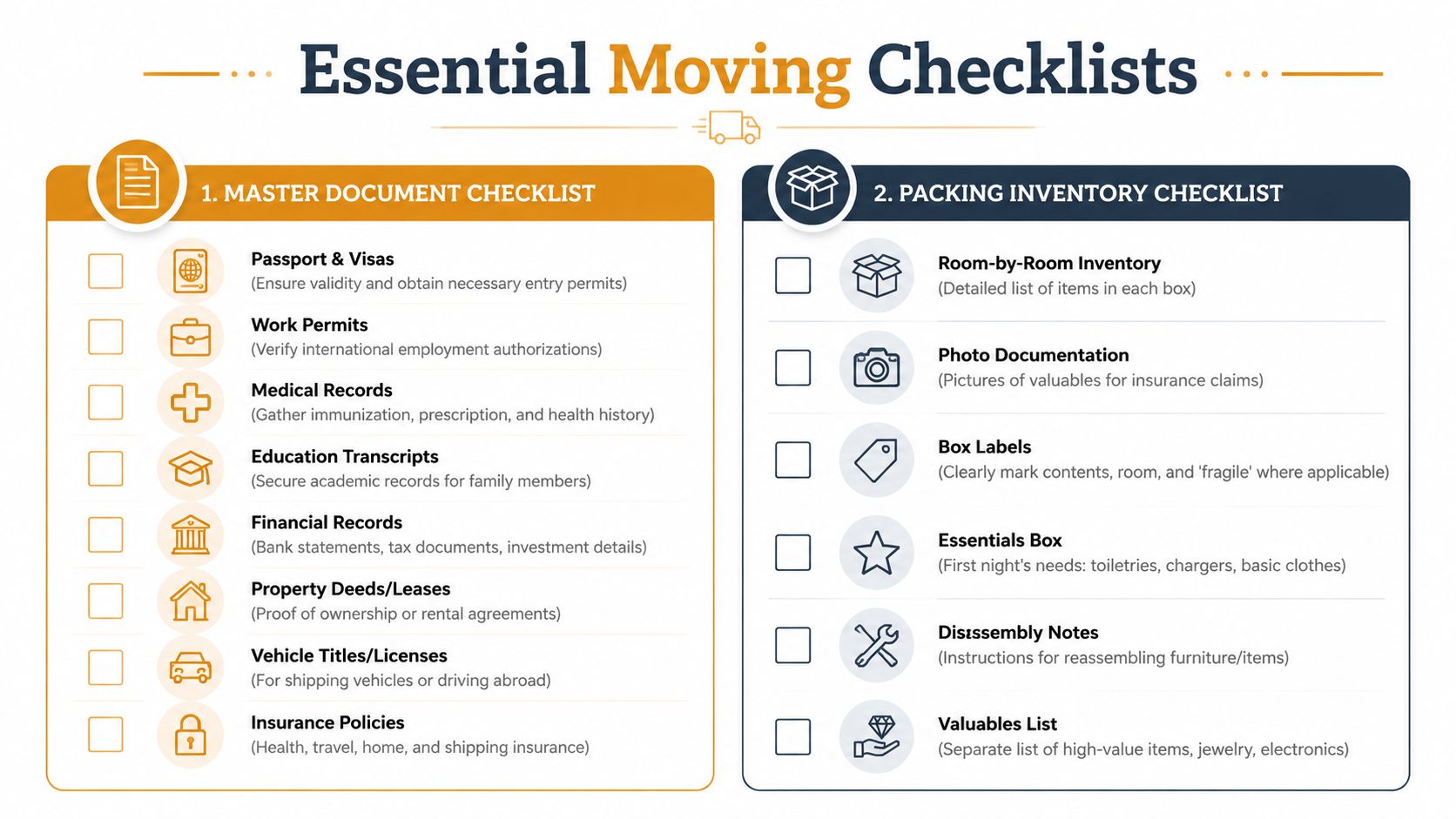
Identity documents: Passport copies and any visas or residence permissions relevant to the move.
Residence evidence: Proof of where the shipper lived before the move and where they'll live after arrival.
Transport documents: Air waybill, bill of lading, or equivalent transport record, depending on mode.
Shipment invoice and declaration paperwork: The shipment should be clearly marked as personal effects where appropriate.
Packing list: A complete inventory that matches the physical shipment.
Insurance records: Useful for claims handling and for demonstrating consistency around declared goods.
Special supporting documents: These may be needed for vehicles, regulated items, or temporary import scenarios.
Declaration quality matters here. FedEx UK states that the commercial invoice and air waybill should be marked “personal effects” and include a reason for export, contact details, and an accurate description, as explained in FedEx UK's guidance on importing personal goods.
Customs-ready inventory checklist
A good packing list is not a box count. It is a customs document.
Use this standard:
Describe goods specifically: “Used men's cotton t shirt”, “used kitchen utensils”, “used children's books”, “used women's linen trousers”.
Separate sensitive items: Electronics, alcohol, batteries, aerosols, food items, and anything regulated should not disappear into general household lines. Many sensitive items will be prohibited either by the courier or the customs authority.
Keep box numbering consistent: Carton numbers on labels, inventory, and transport paperwork should match.
Flag high-scrutiny items: Anything expensive, unusual, or fragile should be easy to identify and explain.
Avoid catch-all language: “Miscellaneous”, “household items”, and “personal belongings” are weak declarations on their own. Customs authorities are becoming stricter and stricter, don't risk a return based on weak descriptions.
Record condition and use where useful: “Used” matters. Customs wants context.
What good inventory writing looks like
Poor entry: “Box 12, personal items”
Better entry: “Box 12, used women's clothing, shoes, handbags, non-commercial household use”
Poor entry: “Kitchen stuff”
Better entry: “Box 31, used plates, bowls, cutlery, cooking utensils, household kitchenware”
If your team needs a standard format, a structured packing list template for customs use is usually better than rebuilding the document from scratch every time.
The inventory should let a customs officer understand the shipment without needing a phone call to decode it.
That is the test.
Navigating the Shipping Process Step by Step
A household move only feels chaotic when the stages overlap without clear ownership. In practice, the process is manageable if each step is done in the right order and the customs file matures before the freight moves.
Start with the operational view, not the emotional one.
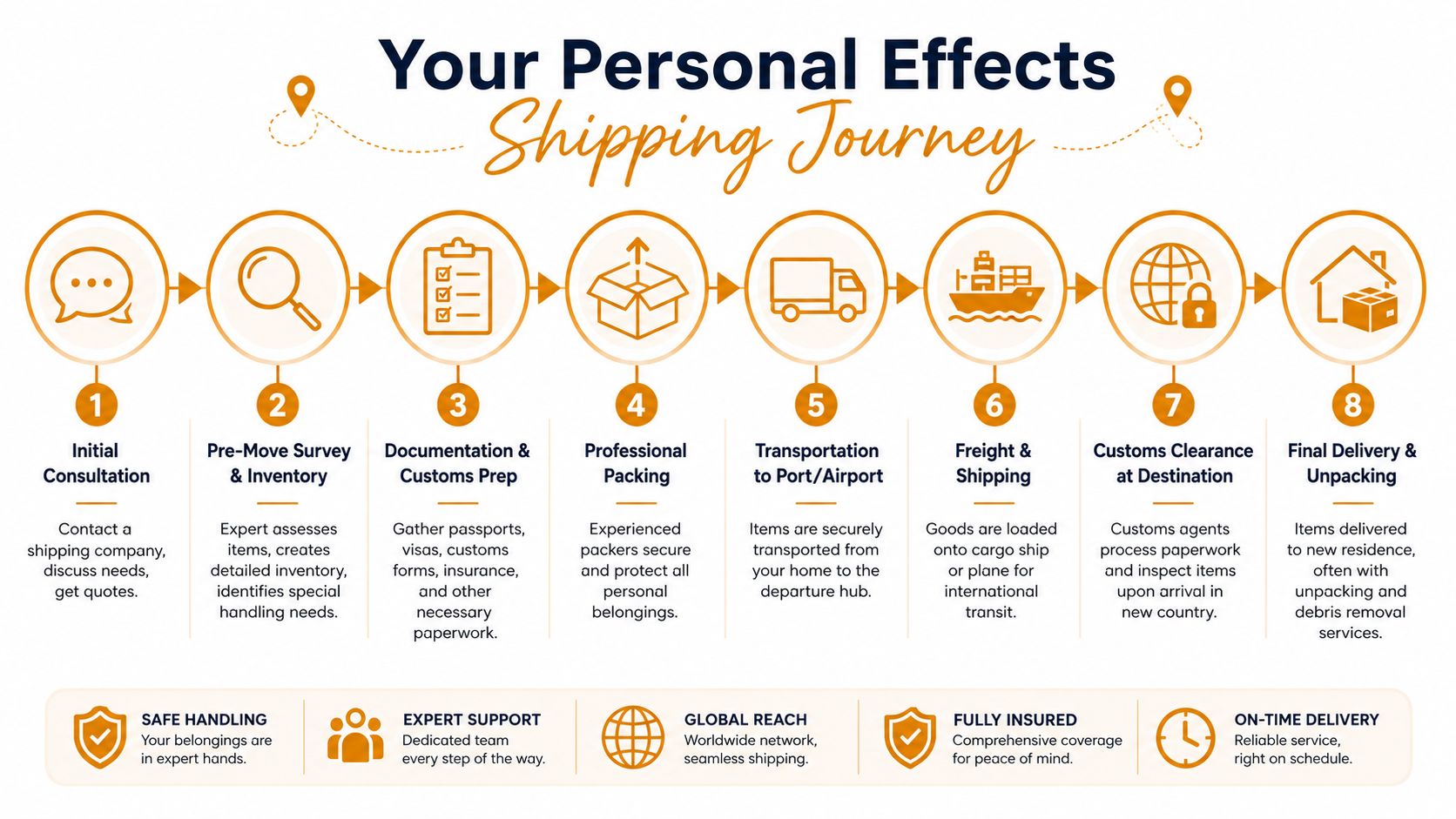
Step 1 and Step 2 quote first, then survey properly
The first serious decision is mode and scope. Air transit suits faster, smaller consignments. Sea freight suits fuller household removals with a longer timeline. Groupage may reduce cost but often increases dependence on excellent inventory discipline, because the shipment has less room for ambiguity.
At quote stage, volume and weight assumptions matter. Every box must have an actual weight and a volumetric weight supplied, dimensions and approved packaging are vital.
Step 3 build the customs file before pack day
Once the move is booked, the temptation is to focus on logistics only. Don't. This is the point where the customs file should be built while the client is still reachable and documents are still easy to retrieve.
That means confirming identity documents, residence evidence, shipment purpose, consignee details, and any relief-related support. If the destination country requires additional forms or declarations, this is when they should be prepared. Waiting until cargo is in transit creates avoidable pressure.
A short explainer can help operations staff align on the process before booking starts to move:
Step 4 and Step 5 pack with customs in mind
Professional packing protects the goods. Customs-ready packing protects the clearance.
Cartons should be labelled in a way that ties directly to the inventory. Sensitive items should be isolated and described properly. If the shipment includes batteries, liquids, food, alcohol, or items with regulatory exposure, these need to be identified before the truck arrives. If your shipment has not been arranged to carry these items, you risk a hold, return or even worse, a complete disposal of your entire load.
A practical sequence looks like this:
- 1
Survey the goods: Identify ordinary household items versus anything that may need special declaration.
- 2
Create the inventory during packing: Don't rely on a reconstruction afterwards.
- 3
Check carton numbering: Every physical unit should be traceable on paper.
- 4
Review exceptions before uplift: Restricted or unclear items should be removed, split, or separately declared, depending on the agreement.
Step 6 to Step 8 clear, deliver, and close the file
When the shipment reaches destination, customs will assess the declaration package, any relief claim, and the goods themselves if inspection is required. If the file is clean, clearance is mostly administrative. If the file is weak, clearance becomes investigative.
After release, final delivery seems straightforward, but this is also the point where claims, shortages, or inventory discrepancies surface. Good operators close the loop by reconciling delivered goods against the packing list and retaining the shipment file for audit and client support.
That final discipline matters. Personal effects shipping doesn't end when the truck arrives. It ends when the shipment is documented, delivered, and defensible.
Avoiding Common and Costly Compliance Pitfalls
Most delays are not caused by exotic customs law. They come from ordinary mistakes repeated at scale. A vague line on an invoice. An aerosol packed into a toiletries carton. An inventory that says “used household goods” for everything.
Those shortcuts create work later. Usually at the worst possible moment.
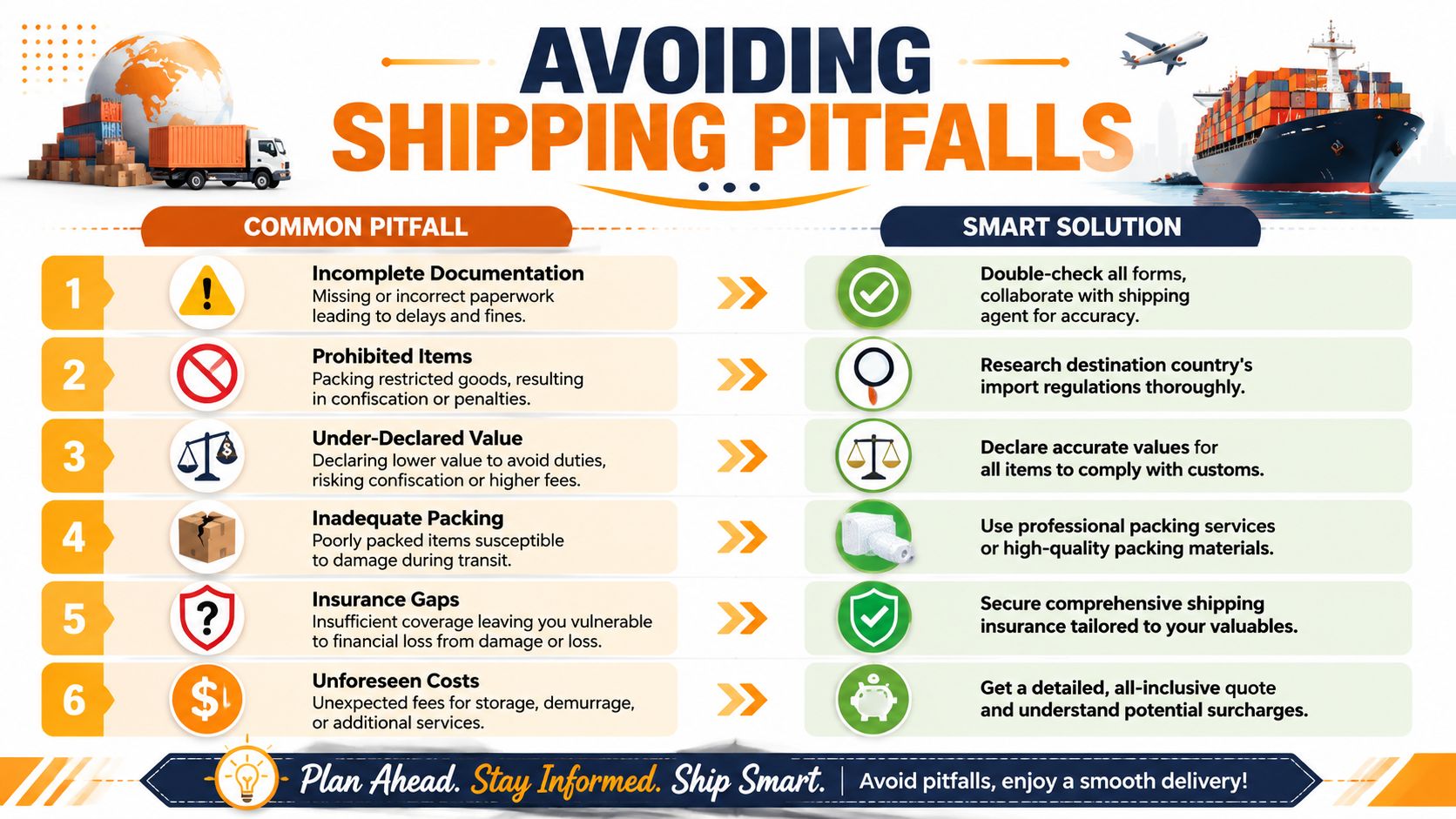
The mistakes that trigger scrutiny
The most common failures I see in personal effects shipping tend to fall into a few categories:
Vague descriptions: “Miscellaneous”, “general items”, and “personal belongings” don't give customs enough to assess the shipment properly.
Mixed restricted goods: Batteries, aerosols, alcohol, food, and plant-related products are often hidden inside otherwise normal household loads.
Inventory mismatch: The physical packing, labels, and declaration documents don't line up.
Incorrect assumptions about used goods: Teams treat used household items as if they don't require commodity-level thinking.
Weak document trails: The shipment may be legitimate, but the file doesn't prove it cleanly.
A frequently overlooked issue is the presence of restricted items in mixed personal shipments. Guidance discussing UK customs treatment notes that batteries, aerosols, alcohol, and food products often require stricter handling, and that the UK's Customs Declaration Service (CDS) environment increases the importance of granular declaration data, making broad “used household goods” language risky. Remember that restricted items and their handling varies between courier and customs authority.
What to do instead
The fix is not more paperwork for its own sake. It is better declaration logic.
| Risk area | Weak practice | Better practice |
|---|---|---|
| Description quality | “Personal items” | Item-specific descriptions with ordinary-language detail |
| Regulated content | Mixed into household cartons | Identified early and handled separately where needed |
| Classification | Broad household wording only | Commodity-aware review, especially for sensitive goods |
| Inventory control | Rebuilt after packing | Written during survey and packing |
| Border data | Assumed from past jobs | Checked against current route and carrier rules |
Customs systems reward specificity. They don't reward optimism.
How Automation Simplifies Customs Intelligence
A relocation coordinator approves a booking on Friday because the shipment looks routine. On Monday, the customer service team is flagging prohibited items listed. By Tuesday, the team is chasing document corrections, carrier acceptance rules, and destination-specific restrictions. That is the operational gap automation should close.
Manual customs research fails in personal effects shipping because the work is time-sensitive and the rules sit in too many places at once, updated unexpectedly and often silently. A single move can require checks on relief eligibility, residence documents, inventory wording, regulated items, carrier exclusions, and local customs notes. If those checks rely on browser tabs, saved PDFs, and one experienced operator's memory, the process becomes inconsistent fast. A shipment to Mexico that was entirely routine last week is now sat in customs with the customer service team pleading for return over disposal because they didn't notice the quiet customs update prohibiting footwear, and the entire shipment is now rendered unable to pass through the border.
In practice, knowledge is usually split across the operation. A broker knows which proof a returning resident needs (but not every team has one). A move manager remembers that a specific carrier will not take certain material. A senior coordinator knows which declaration wording tends to trigger questions at destination. Useful knowledge stays trapped with individuals, so reviews happen late and outcomes vary by who touched the file.
A good customs intelligence tool should standardise those checks before packing and booking are final. It should answer route-specific questions in plain language, show the source behind the answer, and flag issues that affect clearance or carrier acceptance. For personal effects teams, the useful outputs are straightforward:
document requirements by origin, destination, and client status
restriction checks for goods commonly hidden inside household shipments, such as batteries, alcohol, food, cosmetics, and supplements
guidance on declaration wording and inventory detail
visibility into duty relief conditions and where extra proof is needed
a record of what was checked, when, and by whom
Dutiful is one example. It provides verified customs intelligence for documents, restrictions, duties, regulations, templates, and route-specific checks through Assist, with API options for teams that want the same logic inside internal workflows. That matters in relocation because the compliance question usually appears before customs entry. It starts during survey, packing, or booking, when teams still have a chance to separate a problem item, request the missing residence evidence, or correct weak inventory descriptions before the shipment is committed.
That changes the trade-off. Staff spend less time hunting for answers and more time making decisions early, with a clearer audit trail when a client asks why an item cannot move as packed or why extra paperwork is required.