Personal Effects Meaning: The Customs & Shipping Guide 2026
Unlock the true personal effects meaning for customs. Our guide explains what qualifies, the tax implications, and how to avoid costly declaration mistakes.
For customs purposes, personal effects are used, personal-use items an individual has owned and used for a period, often 6 to 12 months, and is bringing with them when relocating. They are distinct from new goods for resale, and that distinction is where costly mistakes usually start.
If you're managing a relocation file right now, you already know the problem. The client says everything in the shipment is “personal”. The packing list says otherwise. There's a boxed laptop, a watch, some clothing, maybe a few items that look more like stock than lived-in belongings. If your team gets the label wrong, customs won't treat it as a wording issue. They'll treat it as a classification problem.
The operational damage is familiar. Holds and storage fees. Requests for additional documentation. Reworked declarations. Duty relief denied. Insurance arguments. Angry customers. Margin leakage nobody budgets for because it starts as a “small” documentation choice and ends as a shipment-level exception.
The personal effects meaning matters because it drives what customs officers expect to see, what documents your operations team need to collect, how values should be presented, and whether the goods fit a relocation pathway at all. In practice, this is less about vocabulary and more about risk control.
Table of Contents
The High-Stakes Definition Your Shipments Depend On
A relocation coordinator gets a shipment description that sounds simple: clothes, books, a watch, some artwork, a laptop, household items. Then the questions start. Is the boxed laptop new? Is the watch a personal effect or a high-value item needing separate treatment? Is the artwork part of household goods, or does it need different declaration language?
That's where the personal effects meaning stops being academic and starts affecting clearance.
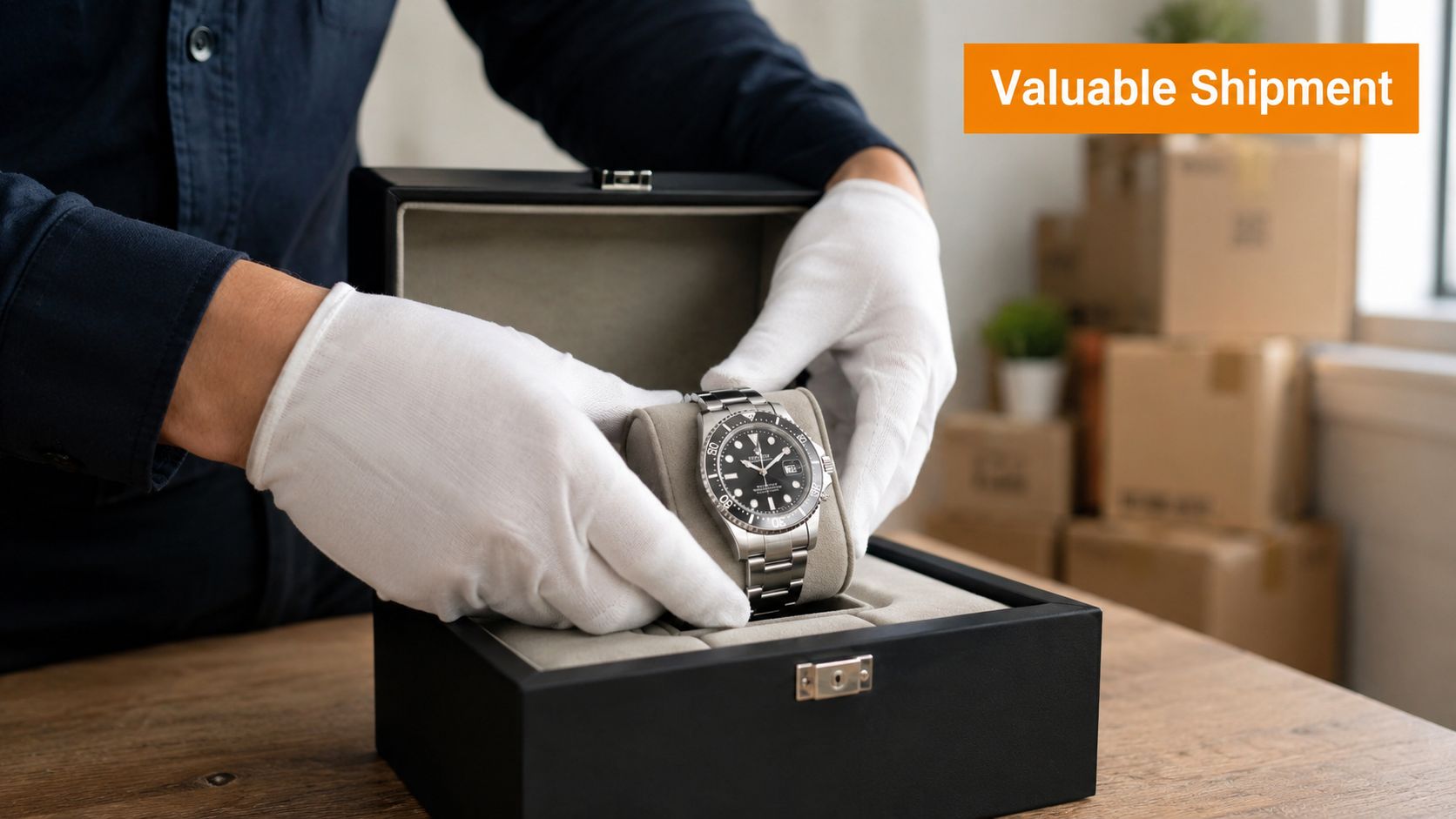
A lot of teams get into trouble because they use “personal effects” as a catch-all for anything owned by a private individual. Customs doesn't work that way. The term has a narrower function, and if you stretch it too far, officers start looking harder at the whole file.
Why this matters on live shipments
The risk isn't just duty exposure. It's process disruption.
Classification drift: One vague phrase on an inventory can pull clothes, valuables, and household items into the wrong category.
Relief failure: If goods don't fit the destination's definition, any relocation relief tied to personal use can be challenged or outright rejected, leaving the customer with a hefty unexpected duty bill.
Escalation risk: When one line item looks wrong, customs often reviews the rest of the shipment more closely, including identification and the customer's intentions.
Operational rule: If an item would look out of place in a personal suitcase or daily-use inventory, don't assume it belongs under personal effects without checking the destination rules.
Experienced teams work from item-level logic, not client-level assurances. “It's mine” isn't enough. “I bought it recently” changes the analysis. “It's for my home office” may change it again. That's why you need a repeatable way to separate true personal effects from household goods, commercial goods, and items that need special handling.
What Are Personal Effects in a Customs Context
The cleanest way to understand the personal effects meaning is to strip away casual language and stick to how the category functions in legal and customs settings.
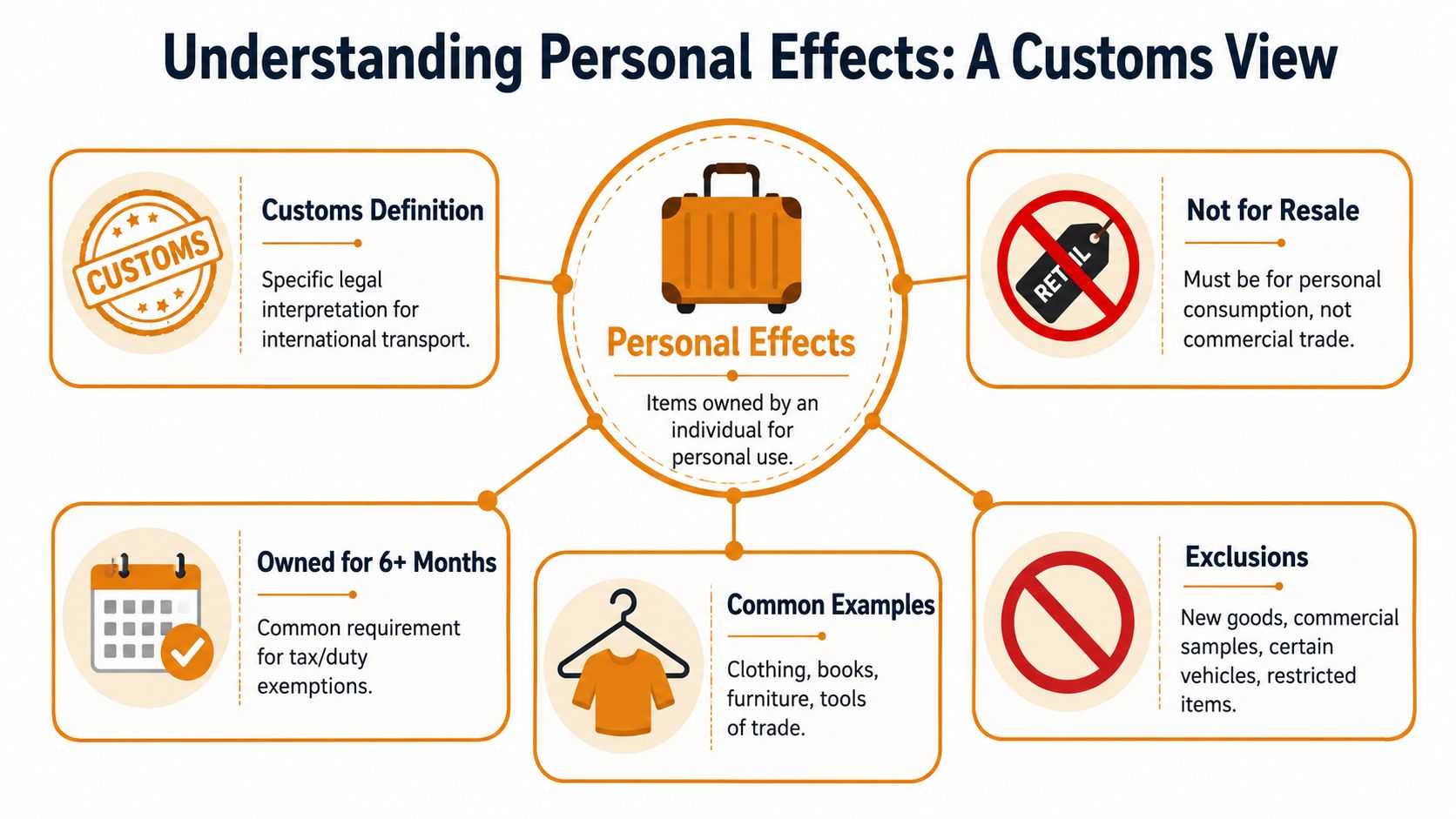
The working customs definition
Personal effects are items with an intimate personal association that are privately owned, used for personal purposes, and typically worn or carried by the individual rather than held for sale or investment.
In UK-facing legal usage, the term is narrower than many operators assume. The standard legal definition treats personal effects as “items of particular significance that are carried or worn”, with core examples including clothing, jewellery, cosmetics, and similar everyday carried items, as noted in this UK-facing legal definition of personal effects.
That distinction matters because many operations teams blur personal effects with household goods. Customs and probate language often separate them for a reason. A coat and a watch fit comfortably inside personal effects. A sofa usually doesn't.
The suitcase test helps. If the item belongs in the traveller's wardrobe, handbag, wash bag, or day-to-day personal kit, you're closer to the right category. If it looks more like home contents, furnishing, stock, or an asset held for value, you need a different classification path.
Later in the file, a visual explainer can help align teams and clients before goods are packed:
The three tests that matter in practice
Most workable assessments come down to three questions.
Ownership: Has the individual owned the item as part of their personal life, rather than acquiring it for onward sale or business stock?
Condition: Is it a used possession, or does it still present like newly purchased merchandise?
Intent: Is the item entering as part of a person's relocation and continued use, or does it look like commercial import activity?
A used jumper, worn watch, and opened toiletries fit the pattern. A sealed electronics box, duplicate high-value items, or goods in retail quantities don't.
The mistake I see most often is not misunderstanding the definition. It's ignoring the evidence customs will use to test that definition.
This is why “personal effects” should never be used as shorthand for “everything the client owns”. It's a specific customs-facing category. Treat it that way in your job file, your packing list, and your pre-clearance questions.
Examples of What Is Included and Excluded
The fastest way to reduce clearance friction is to stop arguing the term in the abstract and work with examples. Most disputes happen around border cases, not obvious ones.
What generally qualifies
In UK customs and relocation practice, personal effects are usually understood as used, privately owned items that are worn or carried on the person, with the legal interpretation often narrowed to goods with an intimate personal association, as reflected in this dictionary explanation of personal effects used in legal and customs contexts.
Goods that often fit that pattern include:
Used clothing: Everyday wear, outerwear, shoes, scarves, belts, and similar wardrobe items.
Jewellery in personal use: Rings, watches, necklaces, and other items clearly used as part of normal personal wear.
Toiletries and grooming items: Opened personal-care items and the sort of goods someone carries while travelling or relocating.
Personal accessories: Handbags, wallets, glasses, and comparable daily-use belongings.
Hobby items with personal association: Small, clearly personal non-investment items tied to the individual's day-to-day life.
What helps these goods qualify isn't just the item type. It's the presentation. Used condition, plausible quantity, and a coherent personal story matter.
What is often excluded
The problem items are usually easy to spot once you stop looking at ownership alone.
New goods in retail packaging: These often look like recent purchases, not established personal use items.
Cash and investment assets: These generally sit outside the concept of personal effects.
Goods held mainly for value: Items acquired as financial assets create obvious classification tension.
Commercial quantities: Multiple identical goods can make a private shipment look like undeclared trade.
Mixed-purpose shipments: Combining personal belongings with business inventory contradicts the whole declaration and will cause a customs hold for investigation and appropriate action.
A watch can qualify. Five boxed watches probably won't. Toiletries can qualify. A case of sealed sample products won't read the same way to customs.
Goods classification at a glance
| Attribute | Personal Effects | Household Goods | Commercial Goods |
|---|---|---|---|
| Typical use | Personal wear or carry items | Domestic use in the home | Sale, supply, or business use |
| Condition expectation | Usually used | Usually used | New or saleable condition common |
| Personal association | High | Medium to high | Low or irrelevant |
| Typical examples | Clothing, jewellery, toiletries, accessories | Furniture, kitchenware, appliances | Stock, samples, resale items |
| Customs concern | Personal use and prior ownership | Relocation eligibility and inventory detail | Classification, duties, licensing, commercial compliance |
| Risk if misdeclared | Relief denied, holding or seizure risk | Reclassification, document mismatch or seizure risk | Penalties, reassessment, or seizure risk |
If your team can't explain why an item belongs in one column and not the others, the packing list isn't ready.
The Financial and Legal Implications of Classification
Calling something a personal effect changes more than wording. It affects duty treatment, document requirements, and the credibility of the declared value. That's why this category shows up in formal legal and administrative settings, not just everyday speech. Authoritative definitions used in probate and benefit contexts emphasise items ordinarily worn or carried, or items with special meaning, including jewellery, clothes, and hobby items, as described in this overview of household goods and personal effects.
Duties taxes and reliefs
The first consequence is financial. If a shipment qualifies under a relocation or transfer-of-residence route, classification can support relief from duties or taxes where the destination allows it. If the goods don't fit, that relief can be refused and full duties imposed.
Operations managers usually feel this in two places. First, the client gets an unexpected landed cost. Second, your team has to unwind a declaration strategy after the shipment is already in motion, often acting as a middle man and feeling pressure from both customs and the client.
There's also a sequencing issue. Once customs doubts that the goods are genuine personal effects, officers may ask for more evidence across the entire shipment, not just the disputed lines. Additionally, if your company is hitting these issues in the same places, a flag will be raised on other shipments causing further delays.
Documentation changes with the category
The second consequence is documentary. Personal effects aren't an informal label you can drop into a packing list and hope for the best. The term belongs to a category that carries documentary expectations.
That means your file needs internal consistency across:
Inventory language: Descriptions should show used personal ownership, not generic box labels.
Supporting evidence: Proof of residence change, ownership period, identity, and route-specific declarations may all matter.
Classification logic: If one part of the file says “personal effects” and another reads like a retail consignment, customs will notice.
If your team struggles with product-level classification beyond personal effects, it helps to align inventory review with a clear understanding of what an HS code is before filing entries that mix categories.
Valuation is where weak files break down
Used goods still need credible values. Severely understating them to make the shipment look less important is one of the quickest ways to invite challenge.
A strong file does three things well:
- 1
It uses realistic second-hand values rather than original retail prices where local rules support used-goods treatment.
- 2
It separates unusually valuable items for clearer review.
- 3
It avoids vague blanket totals that make the declaration look engineered to fly through customs rather than prepared.
Customs officers don't expect perfection. They do expect a valuation story that matches the goods in front of them.
If the shipment includes jewellery, electronics, artwork, or branded luxury items, don't bury them in broad groupings. Declare them clearly, assess whether they belong in the category at all, and assume they'll attract attention.
How the Personal Effects Meaning Varies by Country
The hardest part of the personal effects meaning isn't the base concept. It's that the concept doesn't travel cleanly across jurisdictions.
The definition travels badly
One country may focus heavily on whether the item is worn or carried. Another may care more about prior use, length of ownership, residency change, or whether the goods arrive within a required timeframe (China is a perfect example). Some jurisdictions treat personal effects narrowly and force larger domestic items into a separate household goods process. Others let the two categories sit closer together operationally, but still apply different relief conditions.
That creates a planning problem for multi-country relocation teams. A file that looks tidy under one country's practice can be incomplete under another. If your coordinators rely on a generic internal checklist without route-specific verification, they'll eventually build the wrong declaration on top of the right client story.
Country rules need current verification
For teams that can't afford to get this wrong, route-level verification matters more than memory. One practical option is a verified customs intelligence tool. For example, Dutiful Assist lets teams ask route-specific questions in natural language and review source-cited customs answers before filing. You can view a demo of Assist.
That matters when the client asks a question that sounds simple but isn't, such as whether a recently purchased laptop can travel under a personal effects declaration, or whether a mixed sea freight and accompanied baggage move triggers different treatment.
The safe operating model is straightforward:
Check the destination's current rules
Separate category assumptions from route facts
Document why each borderline item was included or excluded
If a coordinator can't show their reasoning, the file is still exposed.
Common Pitfalls When Declaring Personal Effects
Most failed personal effects entries don't fail because the shipment was impossible. They fail because the file was lazy in ways customs sees every day.
The mistakes that trigger avoidable holds
- 1
Mixing new goods with used personal belongings
This is the classic error. One or two newly purchased items can shift the credibility of the entire inventory. The immediate consequence is usually a customs query or hold. The fix is to segregate new items early and assess whether they need separate declaration treatment. - 2
Using vague packing list descriptions
“Miscellaneous personal items” tells customs almost nothing. So does “box of household goods”. Vague wording forces the reviewing officer to infer risk. Use plain item descriptions that show what the goods are and whether they're used. - 3
Under-declaring high-value items
Teams sometimes try to keep expensive watches, jewellery, or electronics below the radar by folding them into low-value categories. That usually backfires. If customs inspects the shipment and finds a mismatch, trust in the rest of the declaration drops fast. - 4
Failing to prove prior ownership or use
Some shipments look personal but can't support the claim with documents if challenged. That doesn't always mean receipts for every item. It does mean the overall file should support the timeline and purpose of the move. - 5
Treating client language as customs language
Clients call everything they own “personal effects”. Your team can't. You need a filtered, compliance-ready version of their inventory, not a copy of their wording. - 6
Combining personal and business goods in one narrative
A shipment that contains business tools, samples, or saleable stock needs extra care. If you describe all of it as personal effects, you create a contradiction customs can act on.
Pre-mortem the file before departure. Ask which item a customs officer will challenge first. That's usually where the declaration needs work.
The corrective habit is simple. Review the shipment like a sceptical examiner, not like a helpful move coordinator.
A Shipment Checklist for Personal Effects
A good checklist prevents avoidable arguments before they leave the warehouse. It also standardises judgement across coordinators, which matters when senior staff aren't reviewing every file.
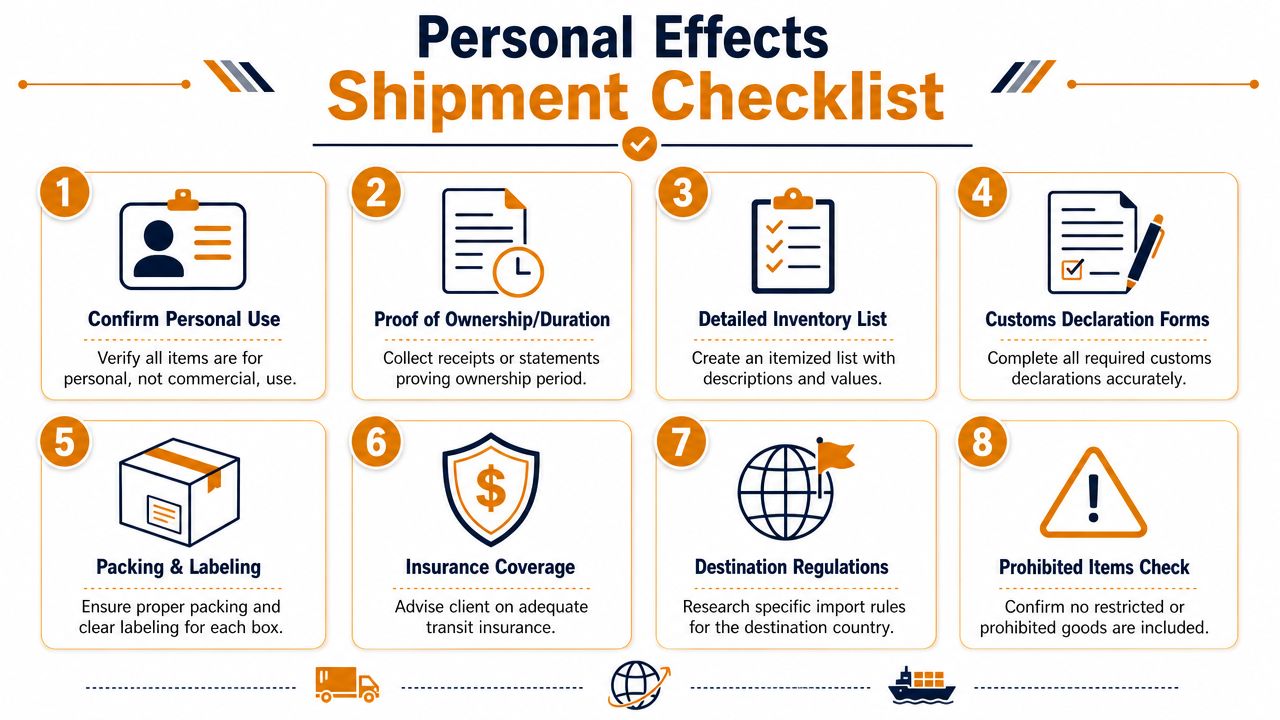
Operational checklist
Work through these steps in order:
Categorise every item first: Separate personal effects, household goods, new purchases, valuables, and anything that may be commercial.
Confirm prior ownership and use: If the route expects a period of ownership, make sure the file can support it.
Check destination-specific rules: Don't assume one country's relocation logic applies to another.
Assign realistic used values: Especially for jewellery, electronics, and branded items.
Write a detailed packing list: Item-level descriptions beat broad labels every time. A structured packing list template for customs clearance helps keep that consistent.
Prepare route-specific declarations: Identity documents, residence evidence, transfer documents, and customs forms should all align.
Segregate non-qualifying goods: If something doesn't fit, don't force it into the category.
Escalate edge cases early: One unclear item is cheaper to resolve before export than after arrival.
A checklist doesn't replace judgement. It gives your team a reliable baseline so judgement is applied to the right issues.
FAQs for Relocation and Logistics Professionals
Can a laptop count as a personal effect?
Sometimes. If it's clearly a used personal device owned by the relocating individual, it may fit the broader relocation story. If it's new, boxed, or obviously part of business equipment, expect questions. Treat electronics as review items, not automatic qualifiers.
Are jewellery and watches always safe to list as personal effects?
No. Some jewellery and watches fit the category naturally because they're worn personal items. High-value pieces still need careful description, credible value, and sometimes separate attention because they attract scrutiny even when legitimately owned.
What if a shipment contains both personal effects and household goods?
That's common. The answer isn't to force everything under one label. Split the inventory cleanly. Personal effects, household goods, and anything non-qualifying should each be described in a way that matches how customs will assess them. Most Western countries may apply relief to both and treat them similarly, however not every country will.
Do personal effects have to be old?
They generally need to look like established personal belongings rather than fresh purchases. “Used” is more important than “old”. A recently acquired item can still be problematic if it appears new and unsupported. Different countries will require different ownership timelines for relief purposes.
How should teams handle borderline items?
Escalate them. Create an exception review step before departure. Borderline items are where experienced coordinators earn their keep.
What's the biggest process improvement for relocation teams handling these shipments regularly?
Don't wait until packing to ask about ownership period, item condition, proof of residence change, or valuable goods. Dutiful Assist helps create a route by route operational workflow - trust it.
The shortest useful definition is this: personal effects are not “everything a person owns”. They're a narrower customs category, and your margin depends on treating them that way.
Dutiful helps operations teams verify customs requirements before goods move, including documents, restrictions, duty treatment, and route-specific rules for relocation scenarios. If you need a faster way to check personal effects requirements without relying on scattered manual research, take a look at Dutiful.